


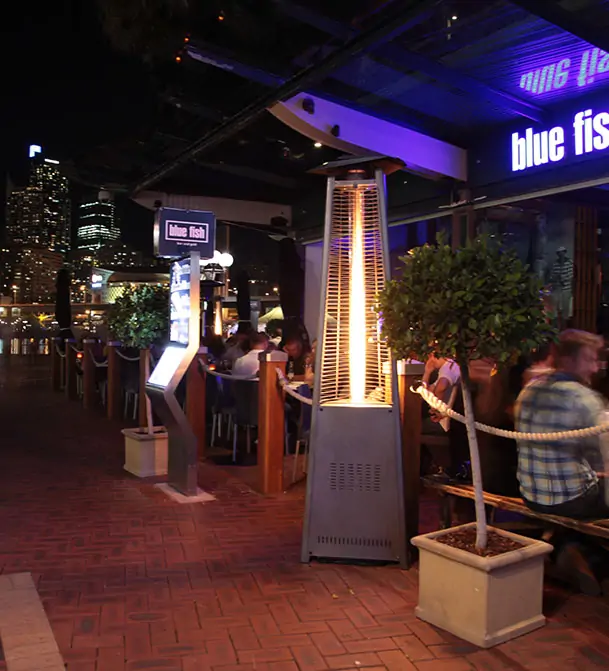
A gas patio heater is one of the best ways to heat an outdoor patio, especially if you want to entertain during cooler evenings. But to get the most out of your heater, it’s essential to place it properly. Good heater placement not only boosts warmth and efficiency—it also ensures safety for your family, guests, or customers.
Here’s what you need to know to position your gas patio heater for maximum comfort.
1. Give It Space to Breathe
Make sure there is enough safe clearance for patio heaters. This helps avoid fire hazards and lets the heat circulate.
- Ceiling clearance: Leave at least 3 feet (or around 90 cm) from the top of the heater to any ceiling or overhang. Some models allow less if you use a certified heat deflector.
- Wall clearance: Keep at least 3 feet (1 metre) from any walls or vertical surfaces.
- Floor clearance: Heaters should sit or hang at least 6 feet (about 1.8 metres) above the floor.
- Combustible materials: Stay clear of things like curtains, plants, and timber posts—3 feet in every direction is a safe minimum.
If you’re after a modern, ambient option that combines heating and style, consider the fire fountain heater for a stunning centrepiece that also meets safe clearance guidelines.
2. Use in the Right Type of Space
Gas heaters require good ventilation to operate safely. That rules out fully enclosed patios or indoor areas unless the unit is specifically rated for it.
Ideal locations include:
- Open-air patios and verandahs
- Covered patios with high ceilings (at least 10 feet) and open sides
- Outdoor dining areas at cafes and restaurants
If you’re unsure which type of heater suits your area best, consider the differences between an electric vs natural gas patio heater to make the best choice.
3. Put It Where People Actually Sit
Sounds obvious, but it’s often missed—put your heater near where people gather, not in walkways or entry points.
- Mushroom-style heaters work best in the middle of a group, throwing heat out in a 360-degree circle. They typically cover 12–20 feet (3.5–6 metres) in diameter.
- Tower-style heaters, like the firestick gas heater, are ideal for positioning along the edges of seating areas. Their vertical design provides warmth without taking up central space or blocking foot traffic.
Avoid placing heaters too close to guests—they’ll get too hot. But also avoid large gaps that leave cold spots. Proper heater placement balances comfort with safety.
4. Think About the Wind
Wind can undo all your heating efforts by blowing warm air away. To get the most out of your heater:
- Position it upwind, so warm air flows with the breeze, not against it.
- Use partial windbreaks like privacy screens or fences, but don’t block ventilation entirely.
- In especially breezy areas, opt for models built for outdoor exposure, like some natural gas outdoor heaters for patios that feature weather-resistant materials.
5. Avoid Wobbly Surfaces
Freestanding heaters should always be placed on level, stable ground. Think concrete, decking, or pavers—not grass or loose gravel. Uneven ground increases the risk of tipping, even with built-in safety switches.
Most newer models are considered the safest outdoor heater choice due to features like anti-tilt shut-off valves and flame failure devices. Still, good placement is just as important as technology.
6. Use Multiple Units for Large Areas
If you’ve got a large patio, one heater might not be enough. Use your space size and layout to plan heater zones. If you notice uneven warmth or other issues, you might be dealing with common patio heater problems that can affect performance.
7. Always Read the Manual
Every heater is slightly different. Some models need more clearance, others less. Certain units can be mounted; others are strictly freestanding.
Always follow the installation instructions for:
- Minimum clearance requirements
- Fuel compatibility
- Mounting details
- Heat direction and safety advice
It may sound obvious, but skipping this step is a common reason behind poor performance—or worse, accidents.
8. Call a Pro for Permanent Installs
Hard-piped gas heaters must be installed by a licensed technician. A professional will:
- Securely mount the unit to walls or ceilings
- Safely connect it to your gas line
- Ensure the setup meets local regulations
If you’re planning a long-term setup or upgrading your space, getting a pro to install a gas outdoor heater for patios is the safest and smartest way forward.
Wrapping Up
Correct placement is key to enjoying your outdoor space year-round. Make sure there’s enough room around the unit, place it where people sit—not walk—and factor in weather and layout for optimal warmth.
If you need assistance, our team at Heat Cool & Mist Co. is here to help match the perfect solution to your needs. Achieve warmth, safety, and comfort by setting up your gas patio heater the right way.